

This week, I filmed my second classroom observation. I find these opportunities to demonstrate my teaching both stressful and insightful—especially given all the variables involved. After analyzing the feedback, here's what I learned from this second observation.
What Went Well?
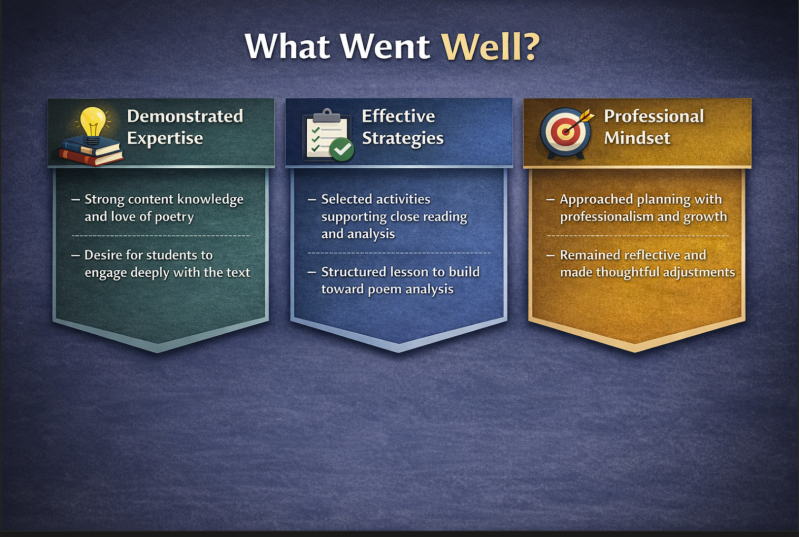
After watching the video, reviewing my clinical supervisor's feedback, and discussing the results with my mentor teacher, I identified several aspects of my lesson that went well. First, I demonstrated strong content knowledge, a genuine love of poetry, and a desire to have my students engage deeply with the text. Second, I chose instructional strategies to promote close reading and analysis. Lastly, I approached my lesson planning with a professional, growth-oriented mindset, remained reflective throughout the lesson planning and delivery process, and continued to make small tweaks throughout the day to improve the lesson. This helped increase student engagement and ensured students were actively participating in their learning.
Opportunities for Growth
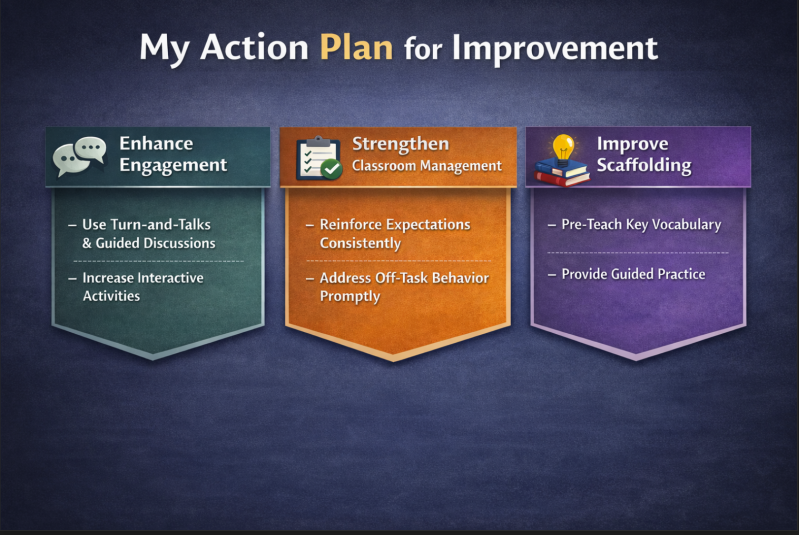
While several aspects of the lesson were successful, this observation also highlighted several growth opportunities. One area I would like to focus on is increasing consistent student engagement throughout the lesson. Despite active student participation, some students struggled with passivity--especially during longer periods of direct instruction. To address this passivity, I would like to incorporate more opportunities for student interaction. For example, turn-and-talks and guided discussions to encourage active engagement and more opportunities for students to truly own their learning.
Additionally, I would like to continue refining my classroom management strategies to ensure I am consistently reinforcing expectations. Despite clearly communicating expectations during my lesson, I recognize the importance of consistently maintaining student focus and minimizing off-task behavior.
Finally, I would like to improve my use of scaffolding to support student understanding, especially when they are working with complex texts. Providing targeted support, pre-teaching key vocabulary, and offering guided practice would help ensure students can access content and engage more confidently in textual analysis.

One example of how I am implementing these strategies is through structured Turn & Talk discussions, such as the one below:
Why these Instructional Changes Matter
These student-centered instructional adjustments will deepen student understanding through meaningful peer-to-peer connections, promote stronger textual analysis, and support the development of critical thinking, confidence, and collaboration.
This experience reinforced the importance of reflection and intentional practice, and I am committed to continuing to refine my instruction to better support all students.
Add comment
Comments