My Philosophy on Scaffolding
Scaffolding is essential to meeting students' needs and ensuring they can access rigorous, grade-level content without lowering expectations. It is not about simplifying learning, but about providing structured support that builds confidence and gradually releases responsibility as students demonstrate proficiency.
What does this look like in my classroom?
As I design lessons, I intentionally break complex skills and concepts into manageable steps, reducing cognitive load and making new learning more accessible for students. This includes strategies such as modeling, guided practice, and targeted supports. As students gain understanding and demonstrate proficiency, I gradually remove scaffolds and encourage them to take ownership of their learning. This approach has helped my students engage more deeply with challenging texts and produce more thoughtful, independent work.
Scaffolding In Action
This term, students are reading The Great Gatsby. In the first few chapters, many students struggled to keep track of the characters. To support them, I implemented several high-impact scaffolds.
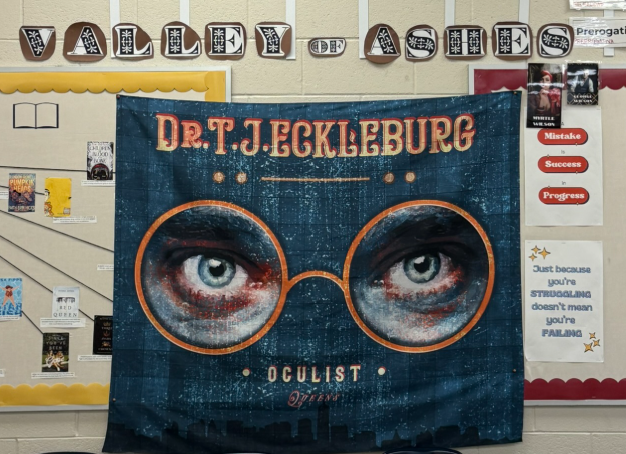
First, I redesigned the classroom environment to reinforce key concepts from the novel. I divided the room into three areas: East Egg, West Egg, and the Valley of Ashes. Each area includes a visual anchor to help students remember important details. For example, East Egg features a poster of a large mansion to represent old money. After the first few classes, I noticed that students were still struggling to remember the main characters, so I added images of each character to the wall for easy reference.
The new class sections and seating chart also served another purpose. After reviewing reading comprehension data from the previous term, I identified several students who struggled on the end-of-unit reading assessment. To support these students, I intentionally placed them in groups with strong readers so they could receive peer support and encouragement. Providing these opportunities helped them not only see what reading fluency and comprehension look like, but also develop greater confidence and independence in their own reading.
Second, I incorporated a character map graphic organizer to support students' understanding further. I have two classes with students who have IEPs and 504 plans, and after speaking with several of them, they indicated that a visual organizer would be helpful. The character map helps students organize characters, settings, and key details while reducing cognitive load. It also provides structured support that builds analytical confidence. As students become more confident, they rely less on the organizer and move toward more independent analysis.
Student Impact
During a PLC meeting, we identified four students who needed additional support based on end-of-unit reading assessment data from the previous unit. After implementing supports, one student demonstrated clear improvement, as evidenced by consistent assignment completion and increased accuracy on bellringers and chapter worksheets.
The three students who are still struggling are primarily impacted by inconsistent assignment completion and attendance issues rather than a lack of understanding. To support these students, I will increase monitoring, continue targeted supports, and help them develop executive functioning strategies to set goals and improve accountability.



Student Work and Evidence of Learning
The following work samples were submitted by a student identified as needing additional support in reading comprehension. In these worksheets, the student consistently uses textual evidence to support their ideas and makes clear connections between characters, setting, and theme. This growth reflects the impact of scaffolding strategies, including visual supports, peer collaboration, and the use of a graphic organizer.

Key Observations:
- In this sample, the student demonstrates clear comprehension of the text.
- The student uses descriptive language and textual evidence to support their ideas.
- In the color tracking table, the student demonstrates emerging analytical thinking by making a connection between the green light and Gatsby's longing.
- The structure of the worksheet helps students develop executive functioning and metacognition. It also reflects this student's engagement and completion of assigned work.
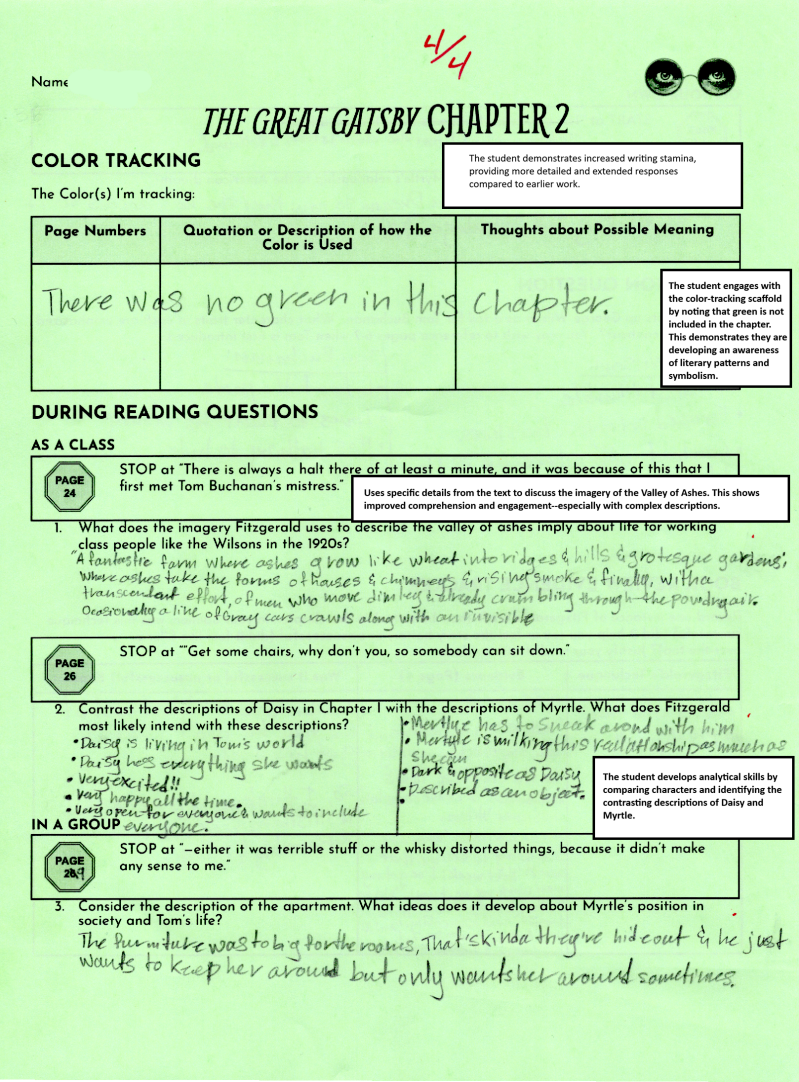
Key Observations:
- In this sample, the student demonstrates increased writing stamina. The responses are more extensive and detailed.
- The student uses specific details from the text to describe the imagery Fitzgerald employs in the Valley of Ashes. This demonstrates improved comprehension from Chapter 1.
- The student demonstrates increased analytical skills by comparing characters and identifying key contrasts.
- The student demonstrates growth and awareness of literary patterns by engaging with the color-tracking scaffold, even though their color was not included in Chapter 2.
- In this sample, the student demonstrates increased writing stamina. The responses are more extensive and detailed.
- The student uses specific details from the text to describe the imagery Fitzgerald employs in the Valley of Ashes. This demonstrates improved comprehension from Chapter 1.
- The student demonstrates increased analytical skills by comparing characters and identifying key contrasts.
- The student demonstrates growth and awareness of literary patterns by engaging with the color-tracking scaffold, even though their color was not included in Chapter 2.